
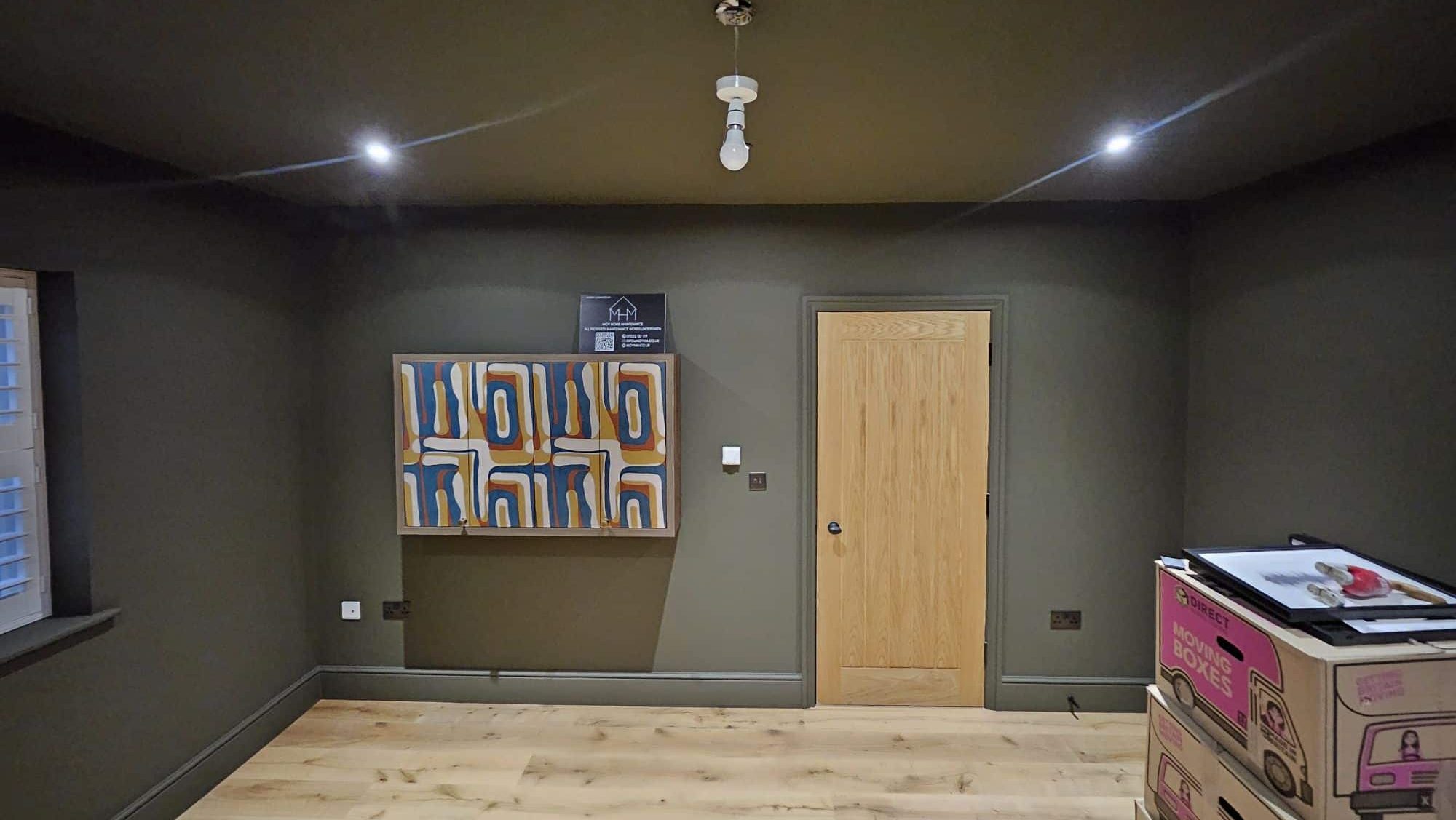


Colour drenching is a really hot internal design trend at the moment; a lot of people are talking and writing about it online, and a lot of people are experimenting with it in their homes as well. Put simply, it’s the technique of using one colour on everything in the room; ceiling, walls, woodwork, radiators, the lot! Sometimes even painting the furniture too. Literally “drenching” the room in the same colour.
Interestingly, colour drenching is nothing new. It’s believed to have originated in the early 20th century in grand country houses across Europe; part of the reason that it’s become popular again could be down to it being seen in period TV shows such as Downton Abbey etc (the same could be said for the current fashion for wood panelling). Colour drenching had a brief revival in the 1970s–80s, particularly using very pale pastel colours or whites for a minimalist look.
Depending on the colour chosen, it can make a room feel big, bright and “open”, or cosy, intimate and “grounded”. By not having white ceilings, woodwork and radiators, the edges of the room seem less obvious – lighter colours seem to stretch out into the distance, and darker colours “envelop” you in a sense of cosiness. Whatever the colour, the simplicity of painting everything in a single colour usually creates a calming effect; the less there is for the eyes and brain to process, the calmer we feel. Rooms feel cohesive, and whatever mood you are trying to achieve, everything is working together to create that look.
Again, depending on the choice of colour, it can be used in modern homes or period properties, and to create simple minimalist designs or bold statement interiors. So the choice of colour is really important to achieve the mood you are looking for, but choosing the right type of paint is equally important when it comes to successfully creating that look, and hopefully keeping it looking good for years to come. As a professional decorator I’ve worked with dozens of different types of paints from many manufacturers, so I thought I’d write a quick blog for all you colour drenchers and share my thoughts on which paints work particularly well for this design technique.
This blog is dedicated to the best paint for colour drenching. Feel free to skip ahead if the product recommendations are all you need.

Which Paints are Suitable for Colour Drenching?
I’ll put the question of colour to one side for now, and just take a moment to think about what features a paint needs to make it good to use for colour drenching.
Colour “depth”/pigmentation
Whatever colour you choose, you want it to feel really “rich”. The higher the level of pigments in the paint, the more intense the colour will feel (and the better the paint will cover whatever is already on the walls etc). However, pigments are often one of the more expensive ingredients in paint, so as a general rule you will pay more to achieve that rich, intense colour.
Finish consistency
Ideally, for the colour drenching effect to be really consistent, you should aim to have the same finish on everything. Having matt walls and gloss woodwork won’t achieve the flawless, seamless look that you want, because the woodwork will stand out. So ideally you need a paint that will work on multiple different materials (plaster, metal, wood etc), and then you can literally use the same tin for everything. Some paints can do this, some can but need a primer to help them to stick to shiny surfaces like old gloss paint, and some just aren’t suitable for this type of job.
Durability
As a general rule, woodwork takes a lot of wear and tear in our homes. Skirting boards are accidentally scuffed by vacuum cleaners, door frames are bashed as things are carried through them, doors are pushed closed… it all adds up. A paint that gives you a rich “chalky” finish on the walls is probably not going to be able to stand up to all this abuse on the woodwork, so it’s important to find something really durable that isn’t going to scuff easily and can be washed frequently when necessary.
The problem with all of this is that a certain amount of compromise is needed. Often, people want a very “flat” matt finish when they’re colour drenching – that’s what is currently in fashion and desirable. Unfortunately, matt finishes are usually less easy to clean than slightly “shinier” ones, and making paints harder-wearing often also makes them less matt (most “durable” matt paints have a slightly higher sheen level than the vinyl matt or contract matt from the same manufacturer). So there has to be a trade-off between our aesthetic goals (we want a flat matt finish) and our practical considerations (we need something that doesn’t scuff easily and can be wiped clean).

The Best Paints for Colour Drenching
I’m going to give you four suggestions – two “premium designer” products, and two high-quality trade paints.
Farrow & Ball Dead Flat
This is relatively new (at the time of writing it’s only been available for a couple of years at most). It’s a flat matt finish, and as you’d expect from a premium designer brand, it’s a very pigment-rich paint, so you will get that depth of colour that can be so impactful.
Naturally, it’s available in the full range of Farrow & Ball’s ever-popular colours, but has the added advantage of being harder-wearing than some of their other paints. Dead Flat specifically designed for use on multiple surfaces including walls, ceilings, woodwork and radiators, so it’s ideal for colour drenching.

Little Greene Intelligent Matt or Eggshell
Both have been recently reformulated to improve their ability to adhere to difficult surfaces like old gloss paint, so as long as you still do your prep thoroughly, you shouldn’t need a separate primer with these paints. Like Farrow & Ball, they’re not cheap, but the quality is superb, they’re lovely to use and the range and depth of colours is fantastic.
It’s really up to you whether you prefer the matt look or the (I suspect) slightly easier-to-clean eggshell. Little Greene may be a designer brand, but it’s very popular amongst trade decorators.

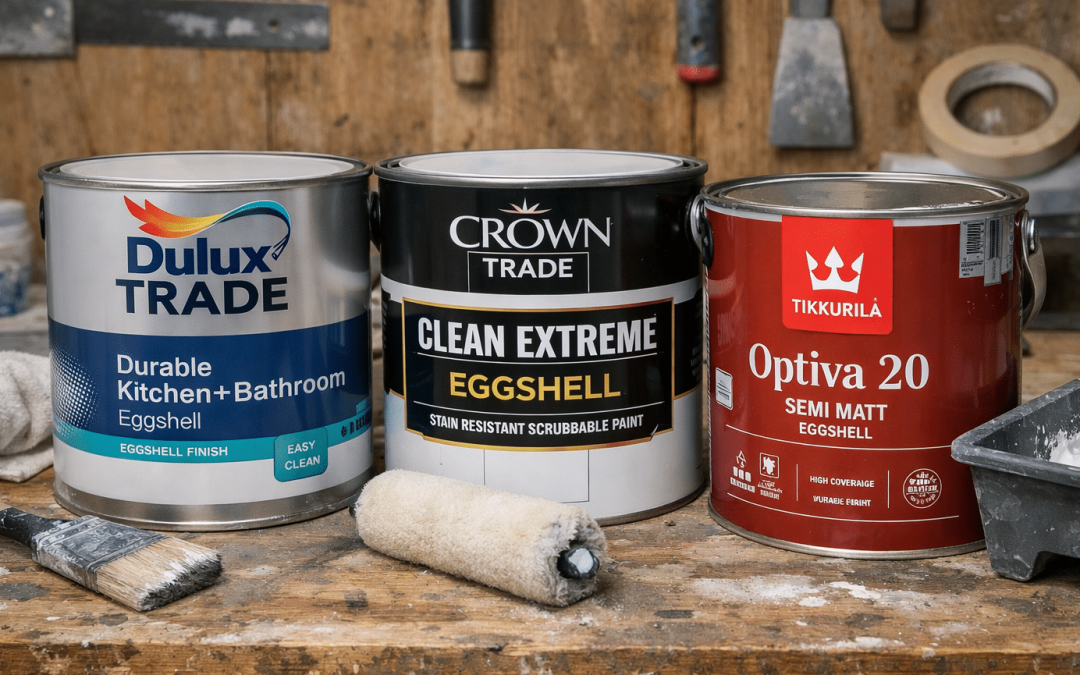
Crown Clean Extreme Scrubbable Matt
This has long been a favourite with decorators for use on walls. It’s a more affordable option – not as cheap as retail paints, not as expensive as designer brands – and most decorators I know agree that the quality is great for the price you pay.
What most decorators perhaps don’t know is that Clean Extreme can be used on woodwork too, as long as you’re thorough with your prep and apply a good adhesion primer (such as Crown PX4) first. It’s also available in anti-bacterial and mould-inhibiting variants if you need them, or as an eggshell (although my recollection is that the eggshell is a bit shiny for colour drenching).

Tikkurila Optiva 5
This is my second choice for a great quality trade paint. I use it a lot myself at home – my wife’s a childminder, so I can vouch for how well it stands up to wear and tear and frequent cleaning. Like the Crown product above, Optiva 5 is great on walls and ceilings but can also be used on woodwork as long as you do your prep properly and use an adhesion primer to help it grip.
Tikkurila have their own range of colours, but are also great at colour matching other brands, so your choice of colours is almost limitless.

A Video Explanation
Mike Cupit explains what he likes to use when colour drenching
Using the same paint on multiple surfaces will help when colour drenching. Certain products are better suited than others.
Mistakes to Avoid When Colour Drenching
Just a couple of hints and tips once you’ve chosen your colour:
- In a colour-drenched room, your eye will be naturally drawn to anything that’s different. If you use matt on the walls and satin on the woodwork, it will really stand out. If you paint everything the same colour except the radiator, you will make the radiator the main feature in the room. If you’re doing colour drenching, you have to fully embrace it!
- Take your time over choosing the colour – look at samples in different lights, in different areas of the room. Better to take a few extra days making the right choice, than having to repaint everything because you made the wrong one!
- Don’t use higher sheen paints like satin. I love satin on woodwork; it’s a great product. But if you use it on your walls and ceiling, because it’s quite reflective, the light will pick out every lump, bump and imperfection in the plasterwork. Much better to stick to lower sheen finishes like matt and eggshell when colour drenching.
- Check that your paint is suitable for use on lots of different materials (substrates). If it doesn’t specifically say that it can be used on wood (for example), then it probably isn’t suitable.
Conclusions
Colour drenching can look impactful and amazing… or equally it can be minimalist and understated. Either can work really well, and the choice of colour will obviously be the key determining factor in the mood that results from your hard work. But choosing a paint that is suitable for multiple surfaces, and is durable enough for your home, will make the difference between a good job and a great job, especially in the longer term. And getting the trade-off right between your aesthetic desire for a flat matt finish and the practical need for something durable and easy to clean is the key question when choosing the ideal paint for colour drenching in your specific room.

FAQs
What is the best Dulux paint for colour drenching?
The best Dulux paint for colour drenching is Heritage Velvet Matt. The colours have a luxurious depth to them, and the finish is sublime. However, it isn’t as durable as an eggshell or satin, so your woodwork may scuff easily over time.
What paint should you use on woodwork when colour drenching?
You should always use the same paint on the woodwork as you do on the walls when colour drenching. That way, you don’t have any contrast between finishes.
What kind of paint should I use for colour drenching?
Durable matt or eggshell. Durable matt looks better, but eggshell is more durable, which is better suited for woodwork.
What is the best colour for colour drenching?
Strong colours are more impactful.

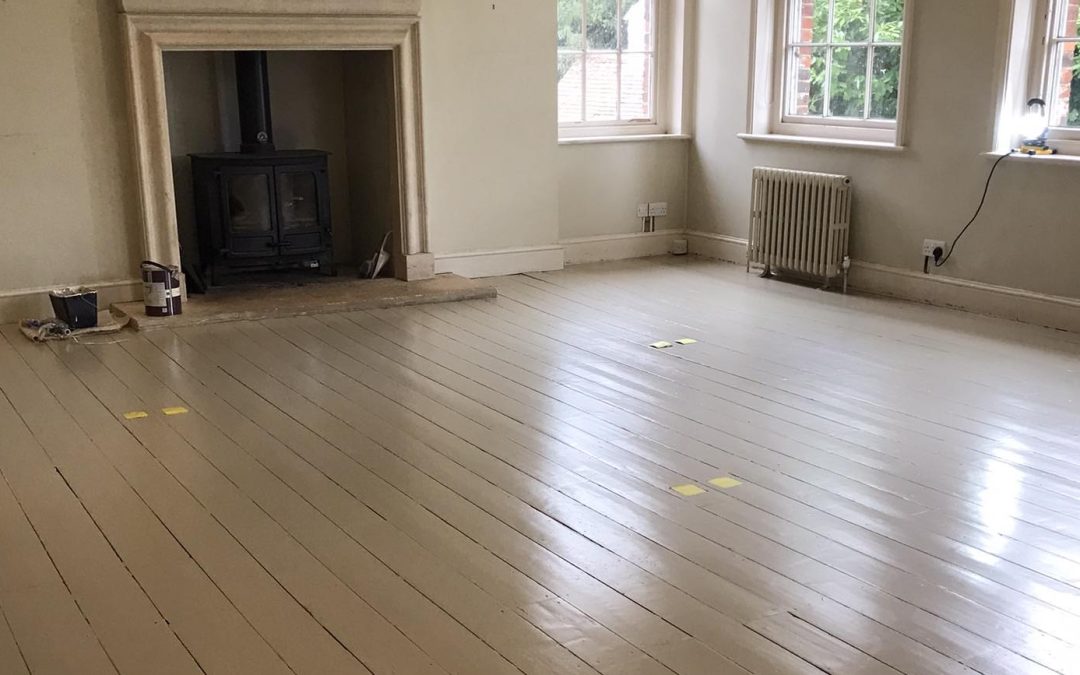









Nice article Robin. 90% of my work at the moment is colour drenching and I’ll admit, after years of white satin woodwork, crisp, white ceilings and grey walls, I’m enjoying doing these quite far out colours. One brand worth mentioning is Lick. Their “Supreme” flat matt is identical to FB flat matt and is half the price. If you pick yourself up a fan deck from their website you can offer this as an alternative to customers and the colours are really appealing. I realise I sound as though I work for them, alas I don’t but I think their product should be getting more traction than it does. It’s a lovely paint to use.