
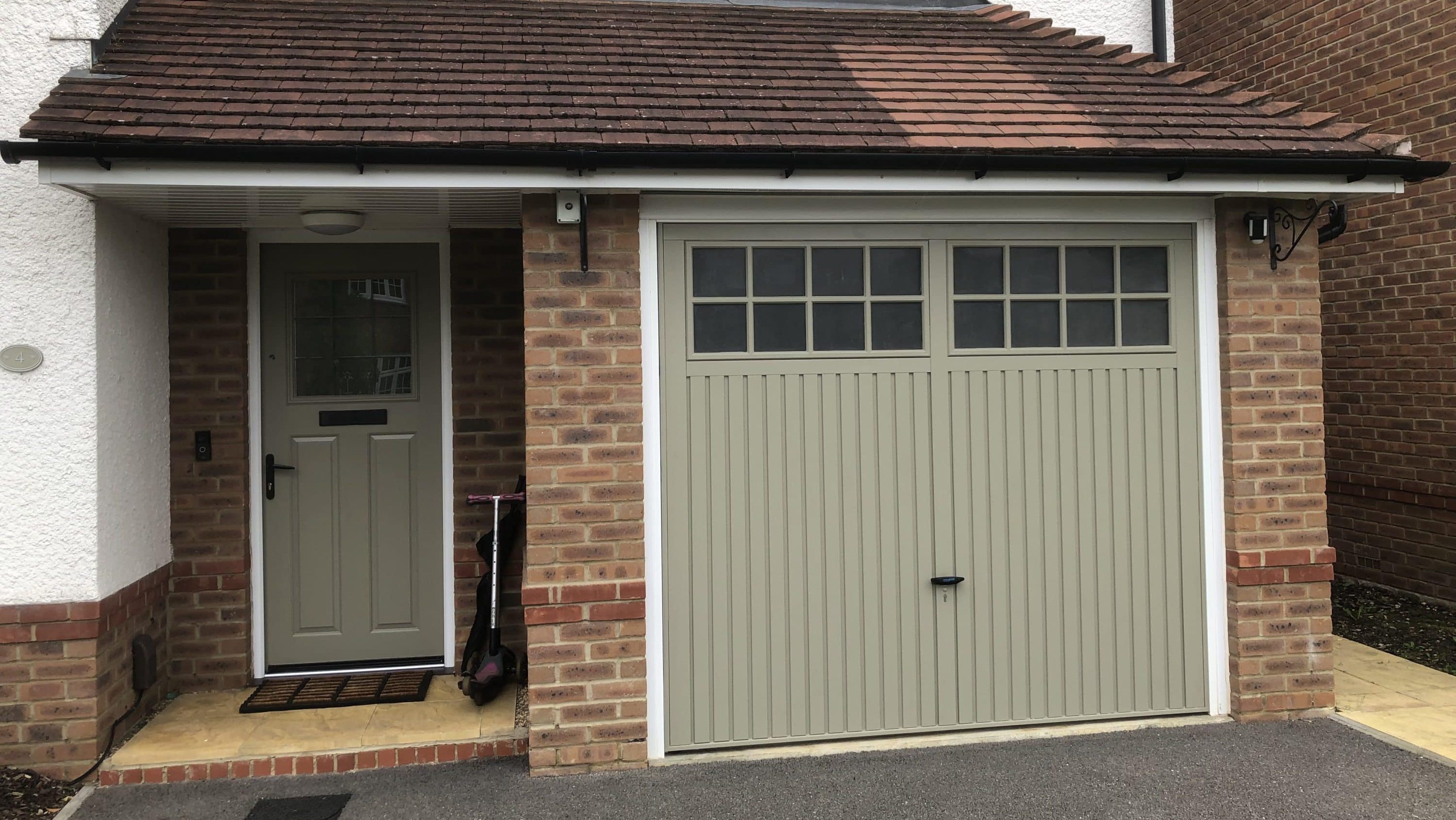



Just like your front door, your garage door is often one of the first things that guests, passers-by or potential buyers will notice. A clean, attractive garage door that is well painted and in good condition makes a great first impression; a dirty one that hasn’t been painted in decades, with faded or peeling paint, gives the impression that the owner isn’t interested, and that the rest of the property may be similarly uncared for.
But painting your garage door isn’t just about aesthetic appeal and looking good – it also protects the door from the elements, and can help extend its lifespan, so in the long term it could save you money.
I’ve painted a fair few garage doors in my twenty years as a professional decorator, and it’s not actually a difficult job to do; it might take a bit of time if there’s a lot of prep required, but it will be worth it in the end. In this blog I’ll take you through the tools and materials you will need, and a step-by-step approach to getting the job done, so that your garage door not only looks great, but will continue to do so for years to come.
Tools & Materials Needed
- Bucket, mild detergent, cloths/rags
- Dust sheets
- Sandpaper, dusting brush
- Masking tape
- Paint brushes, possibly a 4” mini roller depending on the door
- Primer (depending on the door substrate)
- Exterior paint (possibly undercoat and topcoat, depending on the paint chosen)

Choosing the Right Paint for Your Garage Door
Before we get started, the first step of the process is to put some thought into what is the right paint to use.
While the colour and finish (gloss, satin, eggshell or matt) are down to aesthetics and personal preference, the type of paint comes down to more practical considerations. Having said that, if your garage door gets a lot of direct sunlight, you might want to consider choosing a lighter shade; dark colours absorb more heat, and using dark shades where they will be baked in the sun all day can shorten the paint’s life expectancy (either due to fading or peeling), as well as making your garage hotter inside.
The first question is, what is your garage door made of?
Metal – Many exterior paints are described as “suitable for wood or metal”, so these are generally fine for metal garage doors.
Wood – Again, “suitable for wood or metal” paints are usually fine.
uPVC – If your door (or parts of it) is plastic, you will need to use a good adhesion primer to stick to the plastic before applying your paint. There is an exception to this rule, which I’ll come back to later.
You may have a metal main door at the front of the garage, and a wooden side or back door. If you want the same colour and finish on both doors, it makes no sense to buy a metal-specific paint for one and something else for the other – get a good quality paint that’s suitable for exterior wood and metal, and use it on both.
How to Paint a Garage Door – Step-by-Step Guide
Clean
Give the door a good clean using a mild detergent solution. It’s important to remove dust, pollution, spider webs, bird mess etc. from the door first, as this will stop your paint from adhering properly. Allow it to dry.
While you’re cleaning, inspect the door for any areas where the existing paint is flaking or peeling, or areas of rust.
Sand the door
Exactly what to use and how long it will take will depend on the type and condition of the door. A wooden door with a lot of flaky, peeling paint will take more work, starting with coarser sandpaper (120g, maybe even 80g) and then moving to finer abrasive; there may even be areas that need filling and then sanding. A metal door in good condition, on the other hand, will probably only need a quick rub with 240g sandpaper.
Dust off
Once the door is sanded, remove all the dust with a dusting brush.
Sheet up
Put dust sheets down to protect the ground and any nearby plants that can’t be moved.
Mask up
Mask handles etc. if they cannot be easily removed, to avoid getting paint on them.
Prime
Apply a suitable primer to any exposed metal or wood. Apply a good quality adhesion primer to uPVC doors. In all cases, check that your primer is suitable for external use (some water-based primers aren’t).
Paint
Once your primer is dry (check the “recoat time” on the tin), you can apply your first coat. The exact process from here will depend on the paint you have chosen; some paint systems recommend one undercoat and two topcoats, some two undercoats and a topcoat, and some won’t need an undercoat. It’s important to read the instructions and follow the manufacturer’s guidelines.
As with an internal panel door, paint the edges first, then any panels, and then the horizontal and vertical sections, working top-to-bottom. Ideally, try to do the job on a dry, warm (but not too hot) day, and not when the sun is shining directly on the door.
For large, flat surfaces I tend to apply the paint with a 4” mini-roller (foam for oil-based, microfibre for water-based), and then lay off with a brush. Try to avoid touching the door or closing it until each coat is completely dry.

My Favourite Paints for Garage Doors (including examples)
Because garage doors are exposed to the elements all year round, I still prefer to use oil-based paints for most projects. I love water-based for internal woodwork, but I still feel more confident in oil outside.
Click here for a full guide on the best paints for a garage door.
The “Big Two”
The two systems I use the most are Dulux Trade Weathershield and Sandtex Trade Flexi. Both have been around a long time, so have proved themselves on countless jobs over the years. As long as you follow the manufacturer’s instructions regarding number of coats, drying times etc., it’s very hard to go wrong. Dulux is available in Gloss or Satin, and Sandtex is either Gloss or Eggshell.

The “Outlier”
I don’t think many decorators will be expecting this, but I used Farrow & Ball Exterior Eggshell once at a customer’s request and was pleasantly surprised. It dries quickly to around a 20% sheen, and of course is available in all the popular F&B colours. You need to use their undercoat, which helps build the depth of colour.
Here’s the door I painted five years ago – there’s been a little wear and a few issues where the door has got very wet, but by and large the paint is still looking good.

The “Cheat Code”
A couple of years ago, I was asked by a regular customer to paint his garage door, front door, and garage door frame. The trouble is, the door frame is wooden, the front door is composite, and the garage door is metal, except for the window areas which are plastic.
Bradite One Can handles all of these different substrates with no issues. It sticks to almost anything, dries quickly, and doesn’t need a separate primer or undercoat. I got it mixed to a specific shade at Rawlins Paints, who delivered quickly. It’s only available in matt or eggshell, but it’s a great “get out of jail card” when you have multiple surfaces to paint.

Conclusions
Painting your garage door is one of those jobs that can make a dramatic difference to the curb appeal of your property. Yes, it takes a bit of time and effort – especially with oil-based paints – but it isn’t a difficult job if you follow the above process and the manufacturer’s instructions. It’s well worth it for the transformation you can achieve.

FAQs
Is it better to paint a garage door with a roller or brush?
A paint roller is fantastic for large flat surfaces, so it can be a useful tool when painting a garage door. However, you should still cut in and lay off with a brush, so have both to hand.
Can you just paint over a garage door?
Yes, with proper prep and the correct paint system, you can paint over a garage door.
Can I paint my garage door myself?
You certainly can. With a little bit of thought and the correct paint, you will be able to achieve a long-lasting finish that not only looks good, but will also protect your garage door from the elements.
Do you need to prime a garage door before painting?
This depends on the paint system you’re using and the material your garage door is made from. uPVC, composite and metal definitely need to be primed prior to painting.
What to wash a garage door with before painting?
Pretty Boy Brush Cleaner or sugar soap are the perfect detergents for cleaning a garage door prior to painting.







0 Comments