
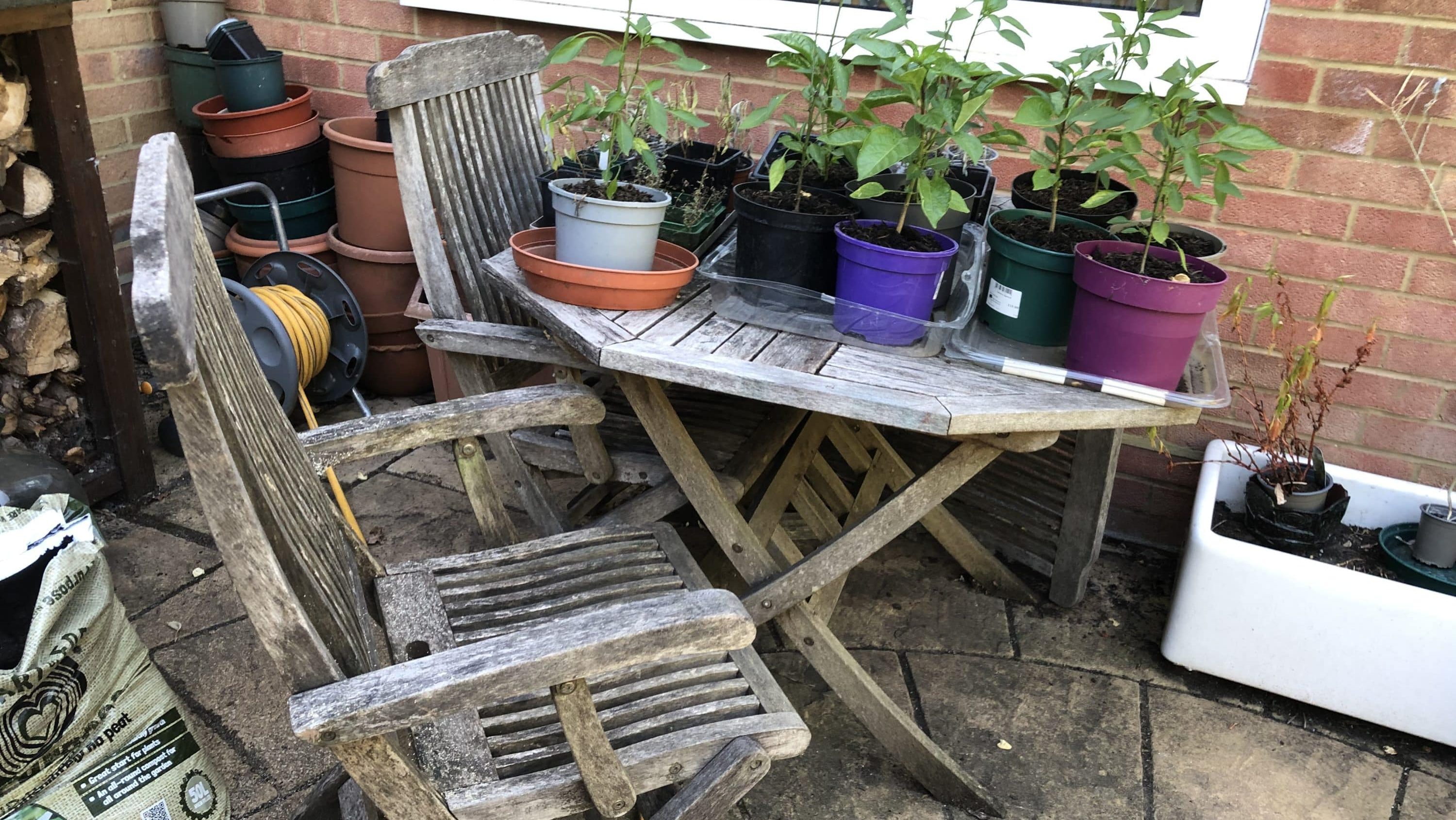



Wood is a wonderfully versatile natural material that can look stunning in all sorts of situations, both indoors and outside. For exterior wood, whether you choose to treat it with a clear, translucent or opaque product, your aim is to not only make it look great, but to protect and preserve the wood for years to come, extending its lifespan and so reducing maintenance costs in the long term.
Unfortunately, for all its good points, wood isn’t like plastic, and it won’t last forever. It is prone to damage from both the sun and moisture, and attack from insects and fungi (including rot). So, it’s important that we take steps to protect it from these issues as much as possible.
In this blog we’ll discuss what your exterior wood’s natural “enemies” are, give you some practical steps you can take to fend them off as long as possible, and look at all the different products available to help preserve and protect it. Feel free to skip ahead if you only need specific information.

Preserve and Protect Exterior Wood – From What?
So, what are the hidden dangers which lurk outside and cause so many problems for external woodwork? The main causes of damage to external wood are either meteorological (weather-related) or biological (caused by living organisms):
UV Damage
Exposure to UV rays can cause both discolouration and structural damage to wood. The first signs of UV damage are a gradual fading of the wood’s natural colour, until eventually it turns grey, a process known as “silvering”. Over time, the UV rays can break down polymers in the wood called lignins, which help hold the wood fibres together. As the lignins degrade, the wood’s structure is weakened and it can start to split, crack, and eventually splinter and crumble.

Moisture
When water soaks into the wood over a prolonged time, it can cause the wood to swell and warp. Additionally, the presence of moisture encourages wet rot and fungal growth.

Temperature fluctuations
As a natural material, wood expands and contracts as it gets hotter/cooler. This expansion and contraction can lead to cracking and weakening of the wood’s structure.
Insect attack
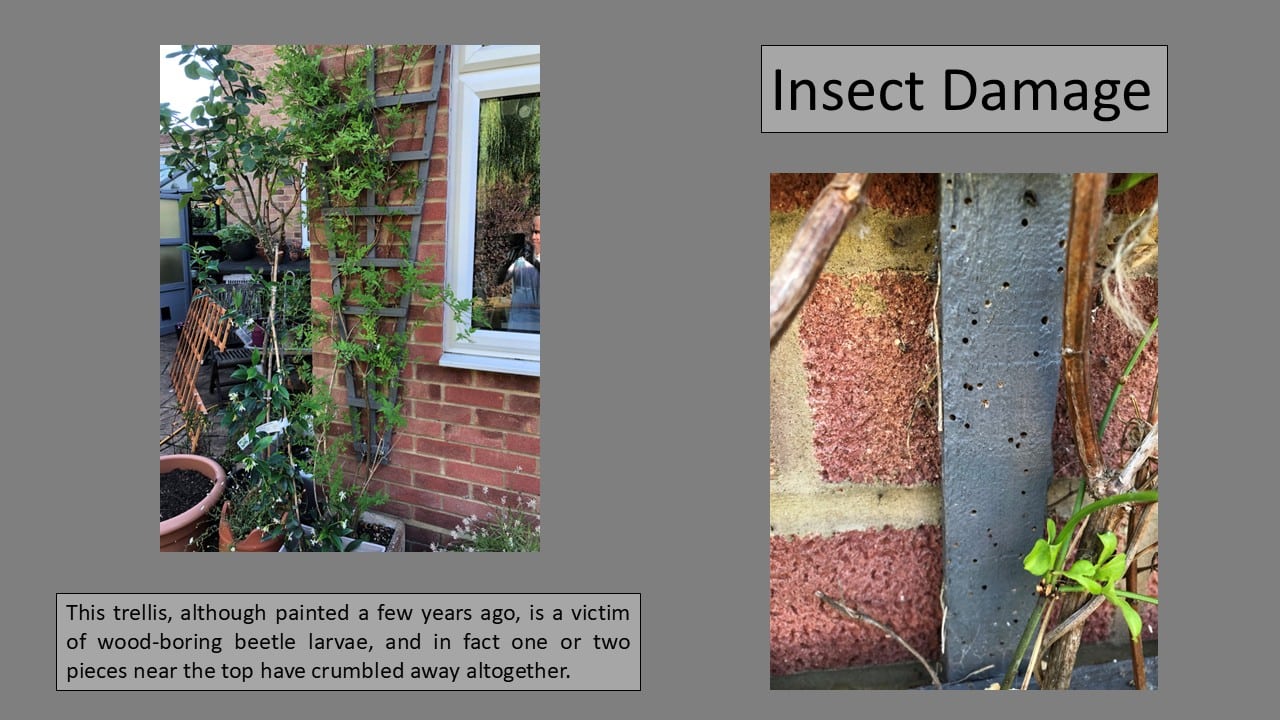
Fortunately, in the UK termites aren’t a major issue, but other insects can cause problems. The best known is probably wood worm, which aren’t worms at all, but the larvae of various beetles (the most common of which is the Common Furniture Beetle). The larvae burrow into the wood, chewing their way through it and weakening its structure.
Fungal damage
Don’t just think of fungus as something that looks like a mushroom. “Wet rot” is a generic term used to describe the damage. caused to wood by various different fungi, which thrive in damp conditions. These fungi release enzymes which break down the wood’s structure, causing it to decay and weaken.

How to Preserve and Protect Exterior Wood
There are so many different types of products and finishes, it’s hard to know where to start. From “basic” wood preservers to oils, translucent stains, opaque finishes, varnishes and paint, a big part of the decision you make on what to use will depend on the look you want to create.
But in terms of physically preserving and protecting your outside wood, I would say that doing anything is better than doing nothing! Any protective product is better than no protection. We’ll come on to talk about the different products that you can use in a minute, but here are a few general hints and tips on preparation that apply to pretty much any type of wood, in any outside situation, with any finishing product:
Make sure the wood is clean and dry
Before applying any product, make sure the wood is clean and dry. If it isn’t fully dry, you risk trapping moisture inside the wood, instead of locking it outside. Use a moisture meter if you’re unsure; they’re surprisingly affordable and you can buy one online by clicking here. Remove any dirt and dust with a stiff brush – contaminants like this can stop your protective product from adhering to/being absorbed by the wood.
Check for any signs of mildew or mould
Again, you don’t want to trap this behind your protective coating, or risk it preventing your coating from adhering properly. Something like Polyvine’s new Mouldguard fungicidal cleaner is ideal, as it was developed specifically for use on wood, and doesn’t contain any harmful solvents or alkalis which might affect the colour or surface of the wood.
Sand if needed
Sanding the surface can help…if it’s done right! Sanding new, bare wood can open the grain, which helps the wood to absorb products like wood preservers, oils and stains more effectively.
However, if you use too coarse a sandpaper you risk leaving big scratches, and if you use too fine a grade, you can actually “close up” the grain, having the opposite effect to what you wanted. I usually use around 120 or 150 grit; 40 will trash the wood, 300 will close up the grain. Obviously, if you are treating rough sawn timber on sheds or fence panels, for example, sanding won’t have much benefit.
Get some Wood Preserver on!
Seriously, apart from the cost in time and money (which I agree, are fair considerations), you have nothing to lose by taking this additional step. Applying a couple of coats of a product like Barrettine Wood Preserver will help to fend off both insect and fungal attacks. You can still go over it with just about any finishing product you like, as long as you wait a week or two to allow the preserver to fully cure.
I recently carried out a small experiment at home; I treated one side of an old pine plank with three coats of Barrettine Wood preserver (clear) and left the other side untreated. After two weeks I applied patches of the following to each side:
- Sadolin Superdec (opaque, water-based)
- Fiddes Hard Wax Oil (Ultra raw)
- Fleetwood Quick Drying Wood Stain (translucent, water-based)
- Polyvine Heavy Duty Floor Varnish (water-based)
- Sadolin Classic Wood Stain (translucent, solvent based)
- Sandtex Flexi Primer-Undercoat (oil-based)

I appreciate that not all of those are specifically designed for exterior use – I just wanted to try a big range of different types of products, and that was what I could find in the shed! And I know this isn’t proper scientific research, but for what it’s worth… I carried out a scratch test on all samples on both sides of the plank, and the use of the wood preserver made no difference at all to the adhesion.
Product Choices for Preserving and Protecting Your Outside Wood
As already mentioned, there is a huge range of different types of products available, depending on the look you want to create. Always check the product packaging (or website) to ensure that it is suitable for your specific project – for example, some aren’t suitable for decking, some are more suited for use on rough sawn timber than on smooth timber, while others work better on smooth.
I’ll explain a little about each type of product and give you my recommendations based on my experience as a professional decorator.
Wood Preserver
As already mentioned, something like Barrettine Wood Preserver can be used on its own, or underneath other coatings, as a great way to fend off attack from insects and fungi. Click here to see online prices.
UV Protection Oil
Oils soak into the wood and impart a lovely warm glow, enhancing the natural look of the wood. Choose one specifically formulated for exterior use, such as Barrettine’s Armourflex Ultimate UV Protection Oil, which not only protects from UV damage, it also repels water, which means it offers better protection and lasts longer than the other products on the market. Click here to see online prices.
Decking Oil
For decking, choose a product specifically designed for this surface, as it needs to not only resist the elements, but also stand up to being walked on repeatedly. For a clear finish, try Barrettine Decking Oil. For a semi-transparent stain, Sadolin Wet Wood Decking Stain is great.
Shed & Fence Treatments
These tend to be at the lower end of the pricing scale. Sadolin Shed & Fence All Weather Barrier may not be the cheapest, but it’s available in a range of colours and is enriched with waxes for enhanced water repellancy.
Translucent Wood Stains
These are really popular, and available in both oil- and water-based formulations. Sadolin Classic and Extra wood stains (both oil-based) have been pretty much the industry standard for years, but their newly reformulated Quick Dry UV Protection Wood Stain (which is water-based) is causing a bit of a stir now. It’s rain-proof in just 20 minutes, and being water-based you can get two coats on in a day. Click here to see online prices.
Varnish
Traditional yacht varnishes, such as Barrettine Yacht Varnish or Sadolin Yacht Varnish – are designed to give long-lasting, hard-wearing protection from UV damage and everyday wear and tear. They are usually only available in oil-based formulations with a gloss finish, so if you want something with a lower sheen, try Sadolin UV Protection Outdoor Varnish, which you can buy in either matt or satin.

Tips for Regular Maintenance for External Wood
I’d love to be able to tell you that once you’ve applied your chosen product, you can put your feet up and relax, safe in the knowledge that you’ll never have to do anything to preserve that wooden object ever again. Sadly, that isn’t the case. Even the best products on the market can only do so much; they can extend the life of your wood, but regular maintenance will help to extend it still further.
Check over your external wood in the autumn
If any minor repairs are needed, it’s good to get them done before winter sets in, which is when the damage happens.
Be prepared to apply maintenance coats every few years.
It’s impossible to be precise as to how often this will be – it will depend on the product you’ve used, the type of wood, the weather, the location (is it in full sun? Is it near the sea?), etc. Check the wooden object in the Spring to see if it might need a recoat – Spring and early Summer are a great time for this type of maintenance, as the warm dry weather is perfect for applying these products.
Clean regularly
It does no harm to give your external wood a good clean once a year. A soft brush and a bucket of mild detergent solution is all you need to remove everyday dust, dirt and grime, and this can help prevent mould and mildew as well.









0 Comments