
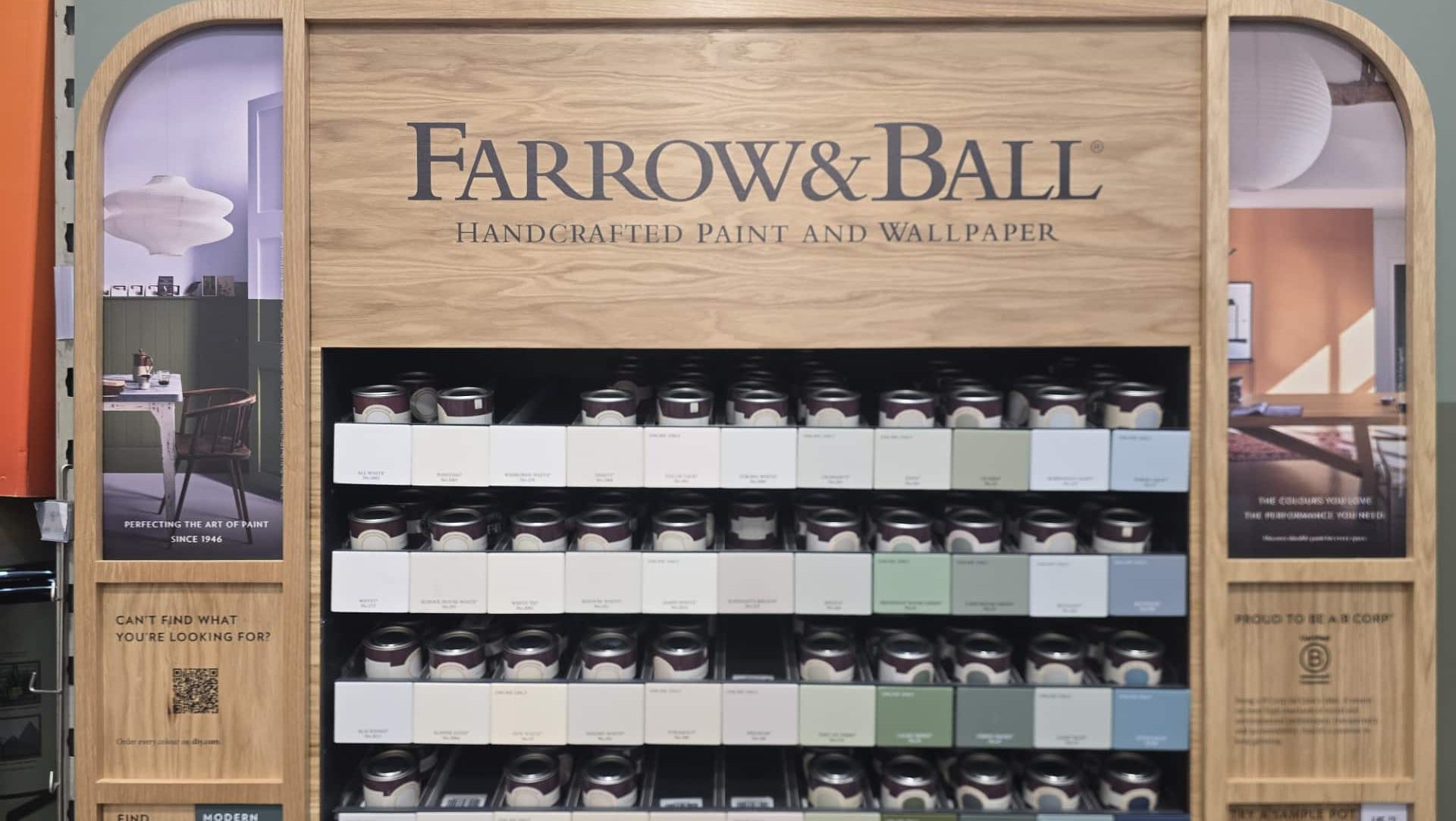



Farrow & Ball can be one of those paint brands that divides opinion – often loved by homeowners but sometimes avoided by decorators. As a professional decorator myself, I can see both sides of the argument: I completely understand how people fall in love with the colours, and the look and feel of the paint when it’s freshly applied. The two usual arguments against Farrow & Ball from decorators are that:
- It’s expensive, both in terms of the cost per litre, and also because many Farrow & Ball paints require the use of their primers first, adding an extra stage (and cost) to the process. But that extra stage helps to achieve the depth of colour and the finish that everybody loves, so it then becomes an argument about whether that specific customer is happy to pay the extra to achieve that.
- The usual argument is that “Farrow & Ball isn’t very durable”. Misconception. Certain finishes within the range aren’t very durable, others are really hard-wearing. It’s about choosing the right finish for the situation, and not (for example) using Estate Emulsion in a high traffic area, because that famous chalky finish won’t stand up to the wear and tear, and isn’t very cleanable.
It’s the same with any other paint – customers often focus on the colour, and it’s our job as decorators to advise them on the most suitable finish, which is just as important; if you’ve spent a lot of money having your house decorated, you want it to continue looking amazing for years to come. Choosing the right paint finish is partly about selecting the sheen level (how shiny) you want, but also about being practical in terms of how durable and cleanable the paint needs to be in that specific room. A good decorator should be able to explain the differences between the various finishes, to help the customer to make an informed choice.
In this blog we’re going to look at many of the most popular finishes within the Farrow & Ball paint range, discuss the pros and cons of each, and talk through which Farrow & Ball finishes are best for each room.
Quick Overview of the Available Farrow & Ball Finishes
This is just a quick summary of the most popular finishes in the Farrow & Ball range, their sheen level, and what surfaces they are designed to be used on. We’re not covering primers or the more specialist products in this blog, just the main finishes.

Interestingly, Estate Eggshell has now disappeared from Farrow & Ball’s website, and Estate Emulsion is now shown under their “specialist” finishes rather than their mainstream interior paints, so at the time of writing this there is clearly some reorganising of the range going on.

Farrow & Ball Paints – A Quick Guide to the Different Finishes
Estate Emulsion
For a long time, this was seen by many as the jewel in Farrow & Ball’s crown. It was that super matt, chalky finish that everyone thought was so desirable…until it got scuffed or marked. If you want that signature F&B look, this is the paint you would use, but it has issues with durability
Pros
- The matt, chalky finish is a classic look, and also helps hide imperfections in walls and ceilings due to low reflectivity
- Great depth of colour (it really does look good)
Cons
- Not very durable. Farrow & Ball describe it as “Gently wipeable, not washable”
- Requires use of F&B’s Wall & Ceiling Primer/Undercoat to achieve the full depth of colour/finish
Most suitable for
- Low traffic areas (bedrooms, dining rooms)
- Ceilings
- Period properties

Modern Emulsion
As the name implies, this is an emulsion paint for walls and ceilings, designed more for modern living. It’s harder-wearing than Estate Emulsion, meaning it is scuff and stain resistant, and can be washed if needed. It also contains anti-mould ingredients, making it suitable for use in kitchens and bathrooms.
Pros
- Scuff and stain resistant, wipeable, generally more durable than Estate Emulsion
- Mould-inhibiting properties for use in kitchens and bathrooms
Cons
- Higher sheen level than Estate Emulsion (but at 7%, this is still definitely a matt paint)
- Again, recommends a coat of Farrow & Ball Wall & Ceiling Primer/Undercoat, adding extra time and expense to the job
Most suitable for
- Kitchens, bathrooms
- Higher traffic areas than Estate Emulsion

Dead Flat
This is a relatively new addition to the Farrow & Ball range. In some ways, I see it as a modern upgrade to Estate Emulsion – it has the ultra-low-sheen finish which is really popular at the moment, but without the chalkiness, which instead has been replaced with added durability. On top of that, it can be used on properly primed wood and metal, making it the perfect paint for colour drenching projects etc
Pros
- Flat matt finish
- Class 1 Scrub rating (meaning it’s extremely durable, scuff resistant and able to withstand frequent cleaning)
- Multi-surface paint
- Fantastic for colour drenching
Cons
- The correct Farrow & Ball primer/undercoat for the surface is recommended (i.e. a different primer for walls/ceilings vs wood/metal), so colour drenching projects can get expensive
Most suitable for
- Hallways, high traffic areas
- Colour drenching projects

Flat Eggshell
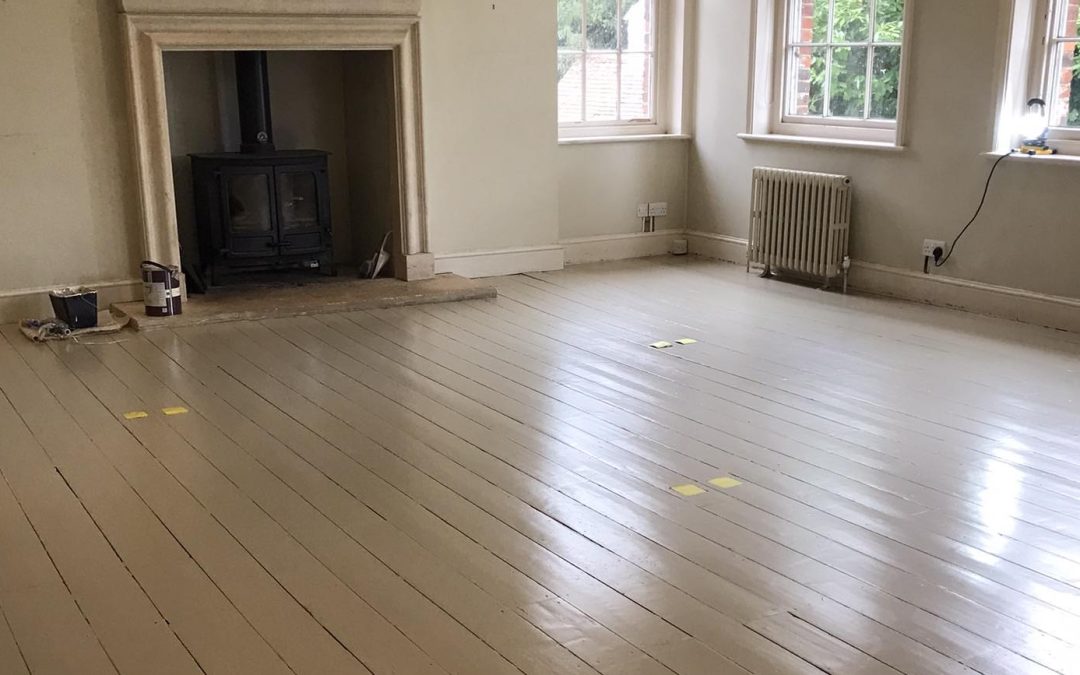
This is the most recent addition to the range, and I honestly think it’s going to prove really popular in the long term. It has lower sheen level than the long-established Modern Eggshell (which I always think of as more like a satin), and is super hard-wearing, making it a great choice for internal wood- and metalwork, but also for furniture upcycling projects. Farrow & Ball are so confident in its durability that they even recommend it for use on wooden floorboards. For more detail, you can read my review of Farrow & Ball Flat Eggshell here.
Pros
- Classic 20% sheen eggshell finish
- Hard wearing
- Water-based, making it low VOC, low odour, quick drying etc
Cons
- As always, they recommend using their own wood- or metal-specific primer/undercoat
Most suitable for
- Internal wood- and metalwork (skirting, doors, even stairs and floors)
- Furniture
- Handpainted kitchens

Modern Eggshell
As mentioned previously, the old Estate Eggshell seems to have disappeared, probably replaced by Flat Eggshell. The alternative as always is Modern Eggshell, which offers many of the same benefits as Flat Eggshell, but with a higher sheen level (more what I would describe as a satin finish). I’ve used it a lot in the past for furniture projects, but will probably switch to the Flat Eggshell now as I prefer the lower sheen look, but that’s just personal taste.
Pros
- Hard wearing, Class 1 scrubbable, scuff and stain resistant
- Water-based
Cons
- Recommended to be used with the appropriate F&B primer
- Sheen level is higher than you would expect from an eggshell, it’s more like a satin
Most suitable for
- Woodwork around the home (doors, skirting, door frames)
- Furniture, including kitchen cabinets
- Stairs and floors (wooden or concrete)
- Interior metal work

Full Gloss
A water-based gloss paint that can be used on wood and metal, both inside and out. If you’re looking for a Farrow & Ball colour in a highly reflective finish, this is the paint for you. You can use it on a variety of projects, from wooden front doors to metal bedsteads. It looks great if you want to make a real feature of things like picture rails, dado rails or wooden fireplaces, for example.
Pros
- Interior and exterior use
- Water-based (quick drying, low odour)
- The only really high sheen product in the F&B range
Cons
- Required the appropriate F&B primer
- Described as “washable and wipeable” – not scrubbable, so I’m not sure about the durability (but happy to be proved wrong)
Most suitable for
- Wood or metal that you want to make a real feature of

Exterior Eggshell
A classic eggshell finish designed to stand up to the rigours of the British weather. The formulation is flexible and water-resistant, and also resistant to mould and algae. The ideal paint for transforming exterior wood and metal, whether it’s garden furniture or garage doors.
Pros
- Designed for exterior use
- Water-based formula
- Classic eggshell finish
Cons
- Requires the appropriate F&B primer
Most suitable for
- Exterior wood and metal (but not decking)
- Garden furniture, wooden doors and windows – you could even Farrow & Ball your shed if you really wanted to!

Exterior Masonry
A product that a lot of people may not be aware of is Farrow & Ball’s exterior masonry paint. Yes, it’s expensive, but for the F&B aficionados, if your inside is painted with your favourite paint, why not the exterior too? It has a super matt finish which is water-resistant but also breathable, making it ideal for older properties (but not exclusively so). It’s designed to resist peeling, flaking and fading, and also to resist mould and algae.
Pros
- Huge choice of F&B colours
- Breathable paint designed for use on exterior brick, concrete, render and terracotta
- Self-priming
Cons
- Expensive
Most suitable for
- Exterior masonry surfaces
Final Thoughts
The honest answer to that question is that it depends on what and where you are painting. Before choosing your paint, think about the room and the surface that you want to paint, and consider what you want from the paint in terms of:
- Durability
- Washability
- Sheen level
Yes, Estate Emulsion gives a lovely flat “chalky” finish, but it’s not very durable or washable, so it’s not ideal for kitchens, bathrooms or high traffic areas. Dead Flat is much more durable and washable, and still a flat matt, but doesn’t have that “chalky” finish. For wood- and metalwork, you can choose by the sheen level you want (Dead Flat, Flat Eggshell, Modern Eggshell or Full Gloss). The secret I guess is to rephrase the question as “Which Farrow & Ball finish is best for this specific situation?”, and hopefully the information in this blog will give you both a few pointers in the right direction, and maybe a little inspiration to try Farrow & Ball paint in one or two places you might not have thought about using it previously.











0 Comments